Economists Call for a Boost in Private Investment and Easier Customs Rules in Budget 2026-27

Economists Call for a Boost in Private Investment and Easier Customs Rules in Budget 2026-27

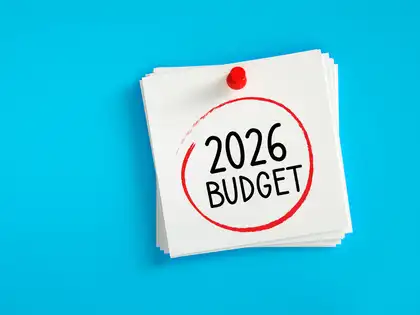
As the government prepares for the upcoming Union Budget 2026-27, leading economists have suggested that the focus should be on reviving private investment and simplifying customs procedures. During a pre-budget consultation chaired by Finance Minister Nirmala Sitharaman, experts shared their views on how India can maintain strong and balanced economic growth.

Focus on Reviving Private Investment

Economists believe that private investment will play a key role in driving India’s next phase of growth. While public spending on infrastructure has supported the economy so far, the private sector now needs to take the lead.

They suggested that the government should create a stable and business-friendly environment by ensuring policy consistency, faster project approvals and clear regulations. These steps, they said, would encourage companies to expand, create jobs and boost overall productivity.

Need to Simplify Customs Procedures

Another major recommendation was to make India’s customs system simpler and faster. Economists said that businesses often face delays and high costs because of complicated documentation and multiple inspections.

Streamlining customs processes — through more digitalisation and faster clearances — would make it easier for exporters and manufacturers to compete globally. This would also support the government’s goal of turning India into a major player in global supply chains.

Broader Economic Reforms on the Agenda

In addition to investment and trade, experts suggested other reforms that could strengthen the economy:

  • Simplify rules and reduce red tape for businesses

  • Improve land, labour and judicial systems

  • Maintain fiscal discipline while supporting productive capital spending

  • Strengthen infrastructure and logistics for faster industrial growth

These reforms would help ensure that government spending leads to long-term economic benefits rather than short-term boosts.

What This Means for Investors and Advisors

For investors and wealth managers, these policy directions signal a renewed push for private-sector growth. Sectors like infrastructure, manufacturing, capital goods and exports could see stronger momentum if reforms are implemented effectively.

Improved trade and customs processes may also benefit companies that depend on exports. Advisors should help clients understand how these changes could shape future investment opportunities, while keeping portfolios balanced and focused on long-term goals.

Source: MoneyControl

Indian Mutual Fund Industry Surpasses ₹70 Lakh Crore in Assets as Smaller Cities Drive Expansion

Indian Mutual Fund Industry Surpasses ₹70 Lakh Crore in Assets as Smaller Cities Drive Expansion

India’s mutual fund industry has reached a major milestone, with assets under custody (AUC) rising to ₹70.9 lakh crore in October 2025, marking a 22% year-on-year growth. This sharp expansion reflects not only healthy market performance but also the growing participation of investors from beyond the traditional metro cities.

Expanding Beyond Metros

Over the past decade, mutual fund participation has undergone a major transformation. The share of India’s top-five cities Mumbai, Delhi, Bengaluru, Kolkata, and Pune in the total mutual fund assets has declined from 73% in 2016 to about 53% in 2025.

At the same time, Tier-II and Tier-III cities are rapidly emerging as new investment hubs. Their contribution has jumped from 3% to nearly 19% during the same period. Cities like Jaipur, Lucknow, Nagpur, Surat, and Vadodara are now key contributors to the industry’s growth.

This trend signifies that financial inclusion is deepening, and mutual funds are becoming a preferred wealth-building option for investors across India not just in urban centres.

What’s Driving This Growth

Several structural factors are supporting this expansion:

  • Digitalisation of investments through mobile apps and online platforms, making mutual funds more accessible.

  • Increased investor awareness, aided by consistent financial-literacy initiatives.

  • Steady SIP inflows, reflecting disciplined investing habits among retail investors.

  • Wider distribution networks reaching semi-urban and rural areas.

Together, these trends are helping India build a more broad-based and sustainable investment culture.

Implications for Investors and Advisors

For investors, this milestone underscores the growing maturity and trust in the Indian mutual fund ecosystem. It highlights that mutual funds are now among the most preferred long-term investment tools for wealth creation.

For financial advisors and distributors, the data signals the need to enhance outreach in smaller towns. Investors from these regions may require more handholding, education, and advisory support. As the industry grows, investor protection, fund selection, and goal alignment will become even more important.

Looking Ahead

The rise of smaller cities as investment powerhouses points to a long-term structural shift in India’s financial landscape. However, with growing participation comes the need for strong investor discipline choosing the right funds, understanding risks, and maintaining long-term commitment.

While this ₹70 lakh crore milestone is a proud achievement, the industry’s next phase will depend on maintaining transparency, reducing costs, and ensuring investors continue to see value in mutual fund investing.

India’s mutual fund industry is expanding beyond metros, powered by rising retail participation and steady SIP flows. The ₹70 lakh crore milestone is not just a reflection of market growth but a symbol of India’s maturing investment mindset and deepening financial inclusion.

Source: MoneyControl

Indian Mutual Fund Industry Surpasses ₹50 Lakh Crore in Equity Assets

Indian Mutual Fund Industry Surpasses ₹50 Lakh Crore in Equity Assets

India’s mutual fund industry has achieved a major milestone: equity assets under custody (AUC) have crossed the ₹50 lakh crore mark for the first time. The figure stood at ₹50.83 lakh crore in October 2025—a sharp rise from approximately ₹39.21 lakh crore in February of the same year.

Industry experts attribute this milestone to several structural themes: rising participation from retail investors, strong monthly SIP (Systematic Investment Plan) contributions, favourable policy and regulatory support, and a broadly positive outlook for equity markets in India.

What’s Driving the Growth?

A key driver is the sustained growth in SIP flows. Data shows SIP contributions have increased roughly 3.5-times from about ₹8,500 crore per month in March 2020 to about ₹29,361 crore by September 2025.

Another factor is improved investor access and awareness: digital platforms, lower transaction costs, financial literacy efforts and broader market participation have all enabled more households to enter equity funds. The equity share of mutual fund ownership has also climbed to an all-time high of around 10.8%.

Implications for Investors & Advisors

For financial advisors, wealth managers and investors this milestone sends several signals:

  • The mutual fund ecosystem in India is scaling in terms of assets and reach — which may increase operational efficiencies and product innovation.

  • Long-term investors may take this as validation of the shift toward equity as a savings vehicle rather than only debt or savings products.

  • However, growing assets also highlight the importance of portfolio discipline, cost awareness, fund selection and avoiding overconcentration in any one category just because inflows are rising.

    Equity assets under the custody of Indian mutual funds have surpassed ₹50 lakh crore for the first time, marking a significant milestone for the country’s investment landscape. This growth has been largely fueled by rising retail participation, consistent SIP inflows, and the steady evolution of a more mature investment ecosystem. For both investors and financial advisors, this achievement underscores the ongoing structural shift toward equity investing in India. However, it also highlights the importance of maintaining discipline in fund selection and ensuring that investments remain aligned with long-term financial goals.

    Source: MoneyControl

India’s Forex Reserves Dip by $5.6 Billion to $689.73 Billion

India’s Forex Reserves Dip by $5.6 Billion to $689.73 Billion (Week Ended 31 Oct 2025)

According to data released by the Reserve Bank of India (RBI), India’s foreign-exchange reserves fell by approximately USD 5.6 billion during the week ended October 31, 2025, bringing the total reserves to USD 689.73 billion.

What Caused the Decline

The drop in reserves comes amid multiple influences. Major components such as foreign currency assets and gold holdings recorded declines:

  • Foreign currency assets (FCA), which form a large part of the reserves, fell by nearly USD 1.96 billion.

  • The value of India’s gold reserves declined by around USD 3.81 billion in the same period.

  • The decrease may reflect a combination of currency-market interventions by the RBI, valuation changes of foreign assets and global commodity price movement.

Why It Matters for Investors and Markets

While the reserves remain at a high level, the drop signals a few key considerations for investors, wealth-managers and advisors:

  • A falling reserve corpus could reduce the cushion available to absorb external shocks such as sharp currency depreciation, sudden capital outflows or a large import bill.

  • The change may influence currency stability, as reserves form a part of the external-sector defence mechanism. Investors with exposure to import-heavy or FX-sensitive sectors should monitor rupee movements and hedge risk appropriately.

  • From a portfolio standpoint, the easing of reserves may not trigger immediate change, but it acts as a reminder of external-sector risk in a growth-oriented investment strategy.

Strategic Outlook

Going forward, investors and advisors should keep an eye on:

  • Weekly reserve data: Significant or sustained declines may indicate stress in external flows or interventions.

  • Rupee-exchange movements alongside reserves: A correlation may suggest central-bank activity to stabilise the currency.

  • Import bill and commodity price trends (especially gold and oil), which impact reserves via valuation and outgo.

  • Investment themes less exposed to currency or external-flow risk — for example, domestic-demand-driven stocks rather than externally-sensitive plays.

India’s forex reserves have decreased by roughly USD 5.6 billion in the week to October 31, 2025, taking the total to about USD 689.73 billion. While the level remains robust, the decline flags the need for caution around currency and external-sector risk in portfolios.

Source: The Economic Times

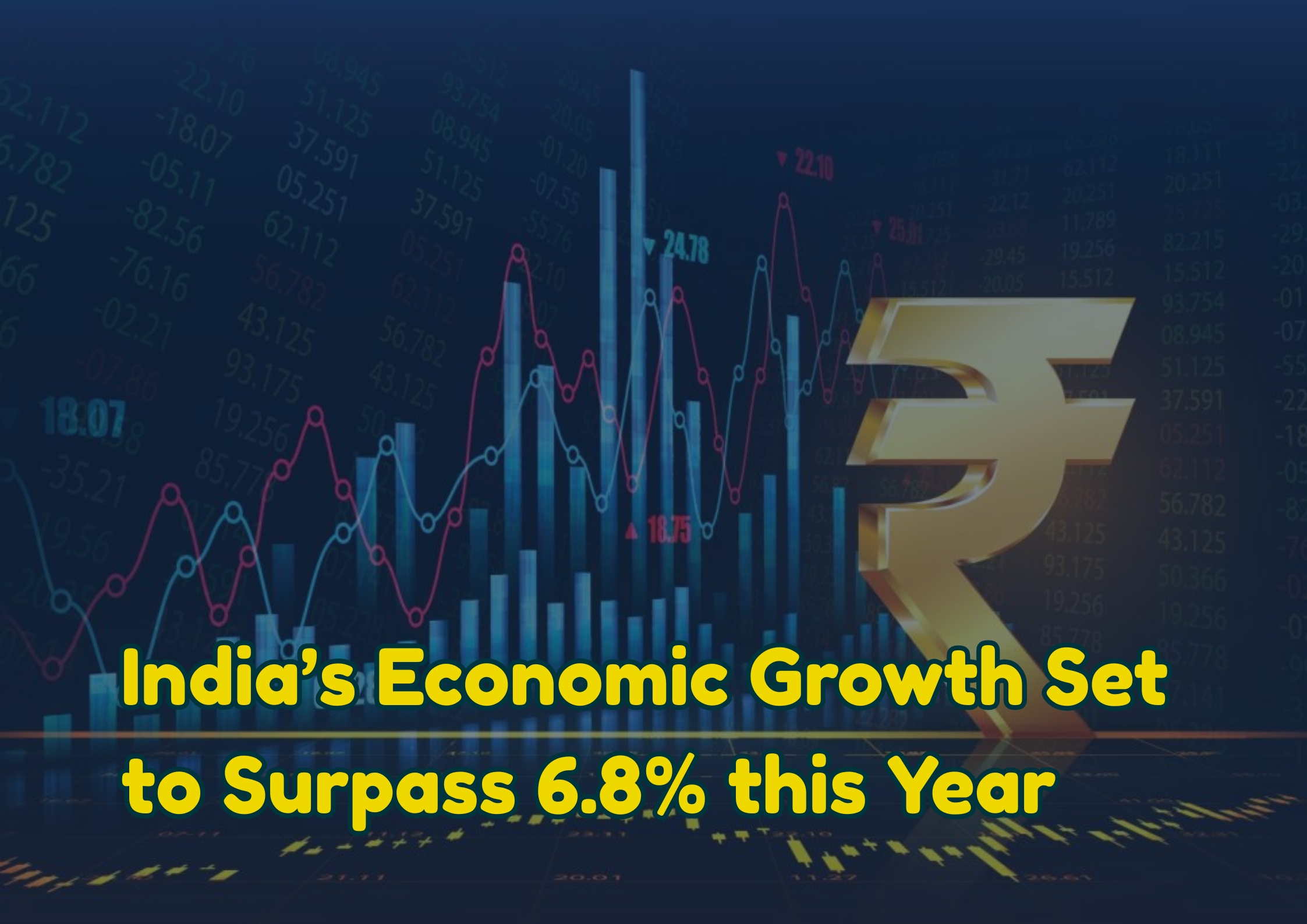
India’s Economic Growth Set to Exceed 6.8% This Year

India’s Economic Growth Set to Exceed 6.8% This Year

India’s economic outlook is turning increasingly positive, with V. Anantha Nageswaran, the Chief Economic Advisor (CEA), expressing comfort in projecting a growth rate above 6.8% for the current fiscal year (FY26). He noted that the full-year growth estimate, previously in the 6.3%–6.8% range, has been revised upward in light of stronger momentum across consumption and investment.

Nageswaran pointed to several factors bolstering the economy: elevated consumer spending driven by rate cuts in the goods and services tax (GST) and income tax relief, a strong first quarter showing (with GDP growth clocking in at around 7.8%) and increasing private capital deployment. These indicators suggest India’s growth engine is firing on multiple cylinders.

What It Means for Investors and Markets

For investors, wealth managers and financial advisers, this upward revision carries meaningful implications. A higher growth base strengthens the case for domestic-demand oriented sectors such as consumer goods, infrastructure, capital goods and financial services. It also underscores that India remains one of the fastest-growing major economies globally—a positive backdrop for long-term equity and thematic allocation.

That said, the upgrade does come with caveats. The CEA stressed that while “north of 6.8%” is comfortable, reaching a “7” handle is still contingent on forthcoming data — especially the second quarter performance. Markets and portfolios should therefore retain a balanced view, recognising upside potential but also the need for execution continuity and external-risk management.

Strategic Outlook & Considerations

  • Sustaining this growth trajectory will depend on how well India translates reform impetus into investment, production and exports.

  • External pressures such as global trade tensions or commodity price shocks could moderate momentum if unchecked.

  • Investors should pair optimism with prudence: while growth themes are reinforced, valuations, sector-specific execution and risk-control remain critical in portfolio construction.

    Source: The Economic Times

India’s Retail Inflation Set to Plunge to 0.48% in October, Reuters Poll Shows

India’s Retail Inflation Set to Plunge to 0.48% in October, Reuters Poll Shows

India’s retail inflation is expected to have dropped sharply to 0.48% in October 2025, according to a Reuters poll of 42 economists. If confirmed, this would mark the lowest level in over a decade, signalling a significant easing in price pressures across the economy. The fall is largely attributed to lower food prices, reduced commodity costs, and the statistical impact of a high base from the previous year.

Food Prices Drive the Decline

A major reason behind this sharp fall in inflation is the moderation in food prices, which make up nearly half of India’s Consumer Price Index (CPI) basket. Prices of vegetables and key perishables have seen double-digit declines compared to last year, helping cool overall inflation. Additionally, the government’s recent cuts in GST rates and steady global commodity prices have also contributed to keeping inflation in check.

Core Inflation and Wholesale Trends

Core inflation, which excludes food and fuel prices to show underlying price stability, is estimated to have eased to around 4.3% in October. The wholesale price index (WPI), another key indicator of cost trends in the supply chain, may have declined by about 0.6% year-on-year, reinforcing the signs of broad-based disinflation across sectors.

Implications for the Economy and Investors

This sharp fall in inflation gives the Reserve Bank of India (RBI) more flexibility to consider monetary policy easing in the coming months. Lower inflation can support borrowing, spending, and overall investment activity. Sectors that are sensitive to interest rates such as housing finance, automobiles, and consumer durables could particularly benefit if rates soften further.

However, experts caution that the current drop may be temporary. Factors like erratic weather conditions, potential supply disruptions, or global price movements could lead to a rebound in inflation later in the year. Hence, investors and policymakers alike need to remain watchful of future trends.

Outlook

With inflation nearing historic lows, India’s macroeconomic outlook appears more stable in the short term. The combination of easing prices, resilient growth, and possible rate flexibility from the RBI paints a positive picture for the economy heading into 2026. Yet, sustaining this momentum will depend on maintaining supply stability and ensuring demand does not outpace production.

Source: The Economic Times

GIFT City: A Catalyst for India’s Global Investing Leap

GIFT City: A Catalyst for India’s Global Investing Leap

At the Bengaluru edition of the Mutual Fund Summit 2025, industry leaders spotlighted how GIFT City is evolving from a regional financial hub into a gateway for Indian investors seeking global exposure.

Once primarily oriented toward attracting foreign capital into India, GIFT City is now being positioned as the bridge through which Indian investors can access international themes such as artificial intelligence, semiconductors and digital infrastructure that were traditionally out of reach. Panelist Vaibhav Shah described it as a “real bridge to the world”.

A Changing Mind-set Among Investors

At the summit, Abhishek Tiwari (CEO, PGIM India MF) noted a discernible shift in investor behaviour: less domestic-only focus, more openness to diversification and global opportunities. Meanwhile, Neil Parikh (CEO, PPFAS) pointed out that exposure to different currencies and geographies strengthens portfolios and helps manage risk-reward dynamics.

Why It Matters for Investors & Financial Advisors

For investors and wealth managers, GIFT City’s evolving role offers strategic potential:

  • It widens the investment universe for Indian investors—moving beyond domestic equities and bonds to global infrastructure, technology and value-chain plays via GIFT City.

  • Investors might gain added upside from favourable currency exposures and access to different regulatory and structural advantages through the GIFT City platform.

  • Advisors should evaluate how client portfolios could incorporate “global via GIFT City” themes, while balancing currency, regulatory and execution risks that come along with stepping outside India-only holdings.

Strategic Outlook & Considerations

While the opportunities are compelling, certain factors need close monitoring:

  • The actual rollout of funds and products through GIFT City will determine how accessible and scalable the global-access thesis becomes for retail and HNI investors.

  • Currency and regulatory risks remain relevant: leveraging a global platform via GIFT City introduces additional dimensions of risk and reward.

  • Investor education and execution capability matter simply gaining access doesn’t guarantee outcome; selecting quality structures, balancing cost and flexibility, and aligning themes with long-term goals remain key.

GIFT City is no longer just a domestic “finance zone” – it’s becoming a strategic gateway for Indian investors to tap global opportunities. As India’s investment ecosystem matures, leveraging platforms like GIFT City can help broaden portfolios, deepen diversification and let advisors frame India-plus-global investment themes. However, execution discipline, cost awareness and risk management will separate the successful from the speculative.

Source: MoneyControl

India-US Bilateral Trade Agreement Talks “Going Very Well”- Piyush Goyal

India-US Bilateral Trade Agreement Talks “Going Very Well Piyush Goyal

India and the United States are making meaningful progress in their negotiations toward a bilateral trade agreement (BTA), Commerce & Industry Minister Piyush Goyal said on 5 November 2025. He indicated that the discussions are advancing smoothly, though several sensitive and serious issues remain, meaning a final agreement will require additional time and careful alignment.

Progress Report

Goyal noted that the countries have completed multiple rounds of talks and are shifting into phases of ironing out the final wording of the pact, having already converged on many of the substantive issues.  The goal remains to increase bilateral trade significantly, building on the current trade volume of approximately USD 191 billion and aiming toward USD 500 billion by 2030.

For India, successful conclusion of the BTA would deepen access to the U.S. market, attract investment, and strengthen supply-chain integration. For investors and financial advisors, the trajectory signals opportunities in export-oriented industries, manufacturing, technology, and logistics. At the same time, the presence of unresolved “sensitive issues” warns that timing and outcomes remain uncertain.

Strategic Considerations

  • While the momentum is positive, firms and funds should be prepared for delays and partial outcomes, given the complexity of the issues under negotiation.

  • Companies exposed to U.S. tariffs or dependent on U.S. market access may see valuation upside if a deal is finalised, but risk mitigation remains essential if negotiations stall.

  • Advisors should monitor announcements of interim trade packages, indicative language from both governments, and changes in trade flows, tariffs or regulatory alignment ahead of the final BTA.

The India-US trade talks are moving ahead with constructive intent, but the final outcome remains contingent on resolving sensitive trade, regulatory and sector-specific issues. For investors and financial planners, this makes the BTA a medium-term structural theme one worth tracking closely, but not a guarantee of immediate market impact.

Source: The Economic Times

SEBI Reconsiders Mutual Fund Brokerage Fee Cap Amid Industry Feedback

SEBI Reconsiders Mutual Fund Brokerage Fee Cap Amid Industry Feedback

The Securities and Exchange Board of India (SEBI) is revisiting its proposal to limit brokerage fees paid by mutual funds, following widespread concern from asset management companies (AMCs) and market intermediaries. The regulator had earlier proposed a steep reduction from 12 basis points (bps) to 2 bps for cash-market trades and 5 bps to 1 bp for derivatives as part of its broader drive to simplify mutual fund cost structures and enhance transparency.

The Regulatory Rethink

SEBI’s move stems from its ongoing effort to make mutual fund expenses more investor-friendly. Under the original proposal, brokerage and transaction costs would either be included within the Total Expense Ratio (TER) or restricted to strict caps.

However, after reviewing feedback from the industry, SEBI appears open to recalibrating its approach. Officials are now exploring a balanced framework one that maintains investor cost efficiency while allowing AMCs and brokers to sustain their research and execution capabilities, which are vital for fund performance.

The final decision on revised brokerage caps will be made after further consultation and impact assessment.

Balancing Investor Savings and Industry Sustainability

The proposal carries significant implications for multiple stakeholders in the mutual fund ecosystem:

  • For Investors: Lower brokerage fees could lead to reduced fund expenses, improving overall returns over time.

  • For AMCs and Brokers: A sharp reduction in brokerage income could limit investment in market research, technology, and trade execution, possibly affecting fund efficiency.

  • For the Market Ecosystem: The move could accelerate the trend toward cost-efficient, scale-driven operations, pushing fund houses to focus on leaner models.

What It Means for Investors and Advisors

For investors and wealth advisors, SEBI’s evolving fee framework underscores the importance of cost awareness and fund selection discipline.

Investors should look beyond headline expense ratios and evaluate how brokerage and transaction costs impact fund returns. AMCs that effectively manage expenses while retaining strong research and advisory teams could gain a competitive edge in the long run.

Financial advisors, on the other hand, will play a key role in helping clients interpret how these regulatory changes could influence mutual fund cost structures, performance trends, and selection criteria.

Looking Ahead: What to Watch

As the consultation process continues, a few areas merit close attention:

  1. Final Fee Caps: The exact levels of revised brokerage caps and their implementation timeline remain under review.

  2. Impact on Fund Performance: While cost cuts can benefit investors, they must not come at the cost of research quality or trade execution.

  3. Shift Toward Transparency: The reform reinforces SEBI’s long-term goal  a more transparent, competitive, and investor-centric fund industry.

SEBI’s review of the brokerage fee cap reflects a delicate balancing act — lowering costs for investors without compromising market efficiency or institutional sustainability.
The final outcome will shape how mutual funds manage costs, compete for performance, and deliver value to investors in the years ahead.

Source: Financial Express

India on Track to Become the World’s Third-Largest Economy: Finance Minister Nirmala Sitharaman

India on Track to Become the World’s Third-Largest Economy: Finance Minister Nirmala Sitharaman

India’s Rapid Rise in Global Rankings

Finance Minister Nirmala Sitharaman has reaffirmed India’s strong growth trajectory, stating that the country is well on its way to becoming the world’s third-largest economy. Over the past decade, India has moved from the 10th position in 2014 to the 5th largest economy today a rise driven by structural reforms, a resilient domestic market, and robust macroeconomic fundamentals.

Speaking at an event at the Delhi School of Economics, Sitharaman highlighted that India’s recovery from global and domestic shocks including the pandemic demonstrates the depth and adaptability of its economy. She credited the nation’s performance to reform-driven governance and continued emphasis on capital formation and inclusive growth.

Strong Economic Fundamentals Supporting Growth

The Finance Minister pointed out that India’s macroeconomic stability has strengthened over the years. The country has seen a remarkable turnaround in the banking sector, with healthier balance sheets, improved asset quality, and better credit flow to the private sector.

Additionally, she noted that over 25 million people have been lifted out of multidimensional poverty, reflecting the success of welfare and job-creation initiatives. This improvement in both financial and social indicators reinforces India’s readiness to scale up as a global growth engine.

Key Drivers of India’s Economic Momentum

Several factors continue to fuel India’s progress toward becoming the third-largest economy:

  • Reform-driven growth: Structural reforms across taxation, infrastructure, and financial markets have strengthened business efficiency.

  • Domestic demand and consumption: India’s vast consumer base continues to drive internal growth, cushioning against external headwinds.

  • Digital and manufacturing expansion: Rapid digitalisation and the government’s push for ‘Make in India’ are transforming productivity and innovation.

  • Financial system resilience: Stronger public sector banks and improved credit quality are supporting sustained investment activity.

Opportunities for Investors and Businesses

The Finance Minister’s statement has significant implications for investors and wealth managers. As India moves closer to the top three economies globally, sectors such as infrastructure, financial services, manufacturing, and technology are expected to attract substantial capital inflows.

For long-term investors, this presents a chance to align portfolios with India’s structural growth narrative. Diversified investments across domestic equities, manufacturing-linked funds, and digital infrastructure themes may benefit from this sustained expansion phase.

Challenges and the Road Ahead

While the outlook is optimistic, India must maintain momentum through policy consistency, infrastructure execution, and global competitiveness.
Analysts caution that external challenges such as global trade tensions or commodity price fluctuations could temporarily affect growth. However, strong domestic demand and continued reforms are likely to keep India on a stable trajectory.

India’s steady climb from the 10th to the 5th largest economy underscores its transformation into a global growth powerhouse. With robust fundamentals, policy-driven reforms, and a youthful population, the nation stands firmly on course to become the third-largest economy in the world.

Source: The Economics Times