Mutual Funds Pump Over ₹13,500 Crore Into IPOs in October

Mutual Funds Pump Over ₹13,500 Crore Into IPOs in October

India’s mutual fund industry recorded significant participation in the IPO market in October 2025, deploying more than ₹13,500 crore across 10 major public issues. This marks one of the most active months for institutional investment, reflecting continued confidence in India’s primary markets.

Strong Interest in Large Issues

Mutual funds were particularly active in some of the month’s biggest offerings.

  • Canara HSBC Life Insurance emerged as the top draw, with MFs buying nearly 71% of the total issue — roughly ₹1,808 crore.

  • LG Electronics India also secured substantial backing, with around ₹5,237 crore invested by mutual funds.

  • WeWork India Management saw MF investments of approximately ₹1,414 crore, reinforcing the interest in consumer- and service-driven businesses.

Selective Approach in Other IPOs

While mutual funds were aggressive in certain deals, they adopted a more cautious stance toward others:

  • The oversubscribed Tata Capital IPO saw MF participation of about ₹2,008 crore, representing only 13% of the issue size.

  • Lenskart, despite its brand strength, attracted around ₹1,130 crore from MFs — close to 15% of the offering.
    This indicates that fund managers remain selective, backing issues with strong valuations, balance sheets, or growth visibility.

What This Trend Indicates for Markets

The strong uptake signals:

  • Growing institutional confidence in India’s equity and IPO markets.

  • Ample liquidity within mutual funds, supported by steady SIP inflows and robust retail participation.

  • A shift toward more diversified participation — with funds evaluating each IPO on fundamentals rather than broad market sentiment.

For retail investors and advisors, the trend highlights rising opportunities but also the need for careful assessment. Mutual fund participation often acts as a signal of institutional conviction, but it also reflects selective choices based on valuation comfort, governance quality, and long-term business prospects.

Source: MoneyControl
India’s Q2 Growth Forecast at 7.3%: What This Means

India’s Q2 Growth Forecast at 7.3%: What This Means

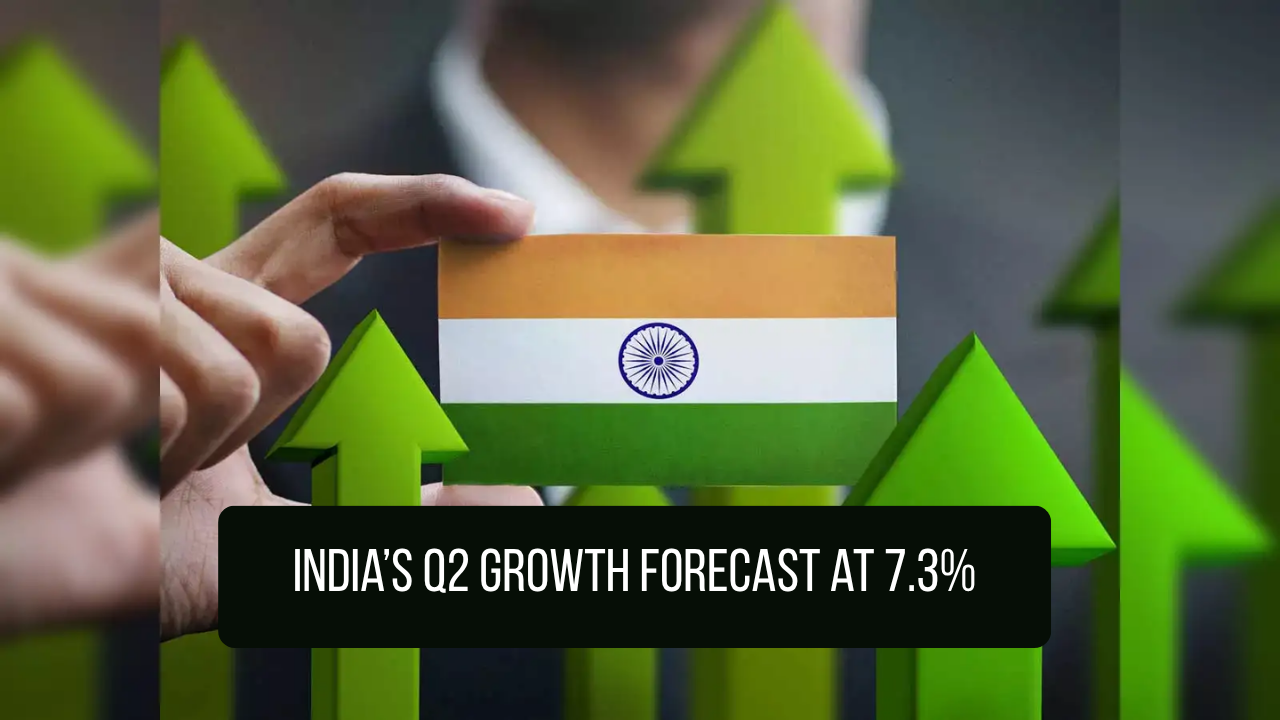
Economists expect India’s GDP to grow around 7.3% in Q2 (July–September FY26), supported by strong rural performance and higher government spending. Estimates range between 6.9% and 7.7%, signalling broad optimism about the economy’s momentum.

What’s Driving the Growth

1. Rural Economy Shows Strength

Stronger rural consumption and steady agricultural activity have significantly contributed to the quarter’s growth.

2. Government Capex Push
Higher infrastructure spending by the government boosted construction activity and capital goods demand, lifting overall output.

3. Support From Exports & Industry

Early export shipments and improved manufacturing activity added further momentum to economic expansion.

Why This Matters for Markets & Investors

  • The numbers underline resilient domestic demand, especially in rural areas.

  • Infrastructure-linked sectors may continue to benefit from sustained government capital expenditure.

  • Industrial and export-driven sectors could also maintain momentum, depending on global conditions.

What Investors Should Watch

  • The official GDP data will be released by the NSO on 28 November 2025.

  • Whether growth is broad-based across sectors will determine its durability.

  • External risks such as global trade issues, commodity volatility, or market corrections may influence momentum ahead.

  • Transition from public-sector driven growth to private investment will be key for the next phase.

India appears to be maintaining a strong growth trajectory, with Q2 forecasts pointing to 7.3% expansion powered by rural demand and government spending. For investors and advisors, the outlook remains constructive, especially for sectors linked to consumption, infrastructure and industrial activity—while remaining mindful of global risks.

Source: The Economic Times

SEBI to Review Conflict-of-Interest Report in Upcoming Board Meeting

SEBI to Review Conflict-of-Interest Report in Upcoming Board Meeting

The Securities and Exchange Board of India (SEBI) will review a high-level committee’s report on conflict-of-interest rules at its next board meeting on 17 December 2025, SEBI Chairman Tuhin Kanta Pandey confirmed.

What the Committee Recommended

The expert panel  led by former Chief Vigilance Commissioner Pratyush Sinha  has pushed for a more transparent and enforceable ethics framework for SEBI’s top officials. Key proposals include:

  • Public disclosure of assets and liabilities for the SEBI chairman, whole-time members, and senior officials.

  • Classifying these senior officials as “insiders” under insider-trading rules, restricting their ability to hold certain investments.

  • Creation of a whistleblower system so that actual or perceived conflicts of interest can be reported safely and confidentially.

  • A “cooling-off” period of two years after leaving SEBI, during which former officials should not work on matters before SEBI.

Why This Matters

  • These reforms aim to strengthen SEBI’s credibility and trust by aligning its governance more closely with global regulators.

  • By enforcing stricter ethics rules, SEBI is signaling that it wants to remove any doubts over conflicts of interest among its leadership.

  • For investors and market participants, clearer disclosure and stronger conflict-management norms should boost confidence in SEBI’s oversight role.

What to Watch Next

  • Board Decision on 17 Dec: Whether SEBI accepts all, some, or none of the recommendations.

  • Implementation Timeline: How quickly SEBI adopts the proposed framework, and whether it becomes legally binding.

  • Market Impact: Whether these changes improve transparency and reduce reputational risk for SEBI — which could influence market confidence over time.

    Source: The Economic Times

WTO Chief Calls on India to Lead Global Trade Reforms

WTO Chief Calls on India to Lead Global Trade Reforms

World Trade Organization (WTO) Director-General Ngozi Okonjo-Iweala has urged India to take a prominent role in driving reforms at the WTO, arguing that the global trading system must remain rules-based rather than dominated by power.

In her address at the 30th CII Partnership Summit 2025, Okonjo-Iweala said India is strategically positioned to benefit from major shifts in the global trade landscape. She pointed to reconfigured supply chains, the rise of green trade, and the rapid growth of digitally delivered services, suggesting India has a unique opportunity to help shape a more inclusive and flexible global trade order.

She also stressed that India’s participation in WTO reform could help correct “old wrongs”  particularly those affecting developing nations.  According to Okonjo-Iweala, India can play a key role in building a system that empowers even smaller economies rather than favoring only the most powerful.

Significance for Trade and the Economy

India’s growing economic influence particularly in technology and digital services makes it a natural candidate to help drive these reforms. The WTO chief believes this is not just an opportunity for India to gain, but also a responsibility: to uphold a rules-based trading system that benefits a wide range of nations.

She warned that without reform, the system risks becoming power-based, which could undermine the multilateral framework.

What This Means for Investors & Policymakers

  • Exporters and trade-focused companies: India’s push for reform could bolster its position in global supply chains and potentially open new trade opportunities in digital and green sectors.

  • Policy implications: India’s leadership could influence how WTO reform discussions evolve — particularly on issues like public stockholding, developing-nation integration, and digital trade.

  • Risk and outlook: While the call for reform is strong, the success of these efforts will depend on consensus-building within the WTO and the ability of developing economies to negotiate effectively.

    Source: The Economics Times

Government Approves ₹45,000 Crore Export Support Package to Strengthen India’s Competitiveness

Government Approves ₹45,000 Crore Export Support Package to Strengthen India’s Competitiveness

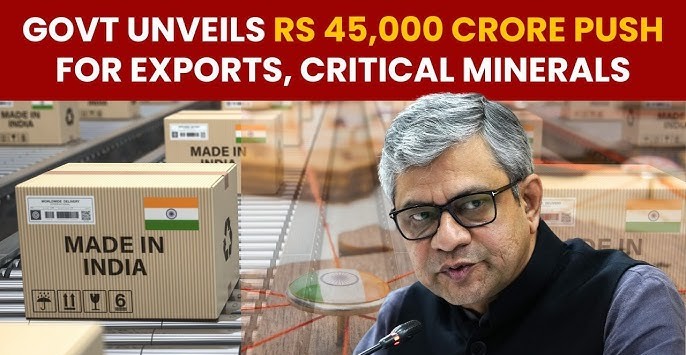
The Government of India has announced two major schemes amounting to around ₹45,000 crore aimed at bolstering the country’s export ecosystem, enhancing global competitiveness and easing long-standing bottlenecks faced by exporters.

What the Schemes Cover

  • The first initiative, the Export Promotion Mission (EPM), carries an allocation of ₹25,060 crore and is designed to consolidate multiple export-related incentives into a unified framework.

  • The second, the Credit Guarantee Scheme for Exporters (CGSE), allocates ₹20,000 crore to expand credit access—particularly for micro, small & medium enterprises (MSMEs) and labour-intensive sectors.

Together, these support measures are expected to address key challenges such as affordable finance, compliance and documentation burdens, branding and market access for new exporters, and diversification into newer geographies.

Why This Matters

From a strategic perspective, the timing and scale of this intervention are significant. Exporters in India have been navigating a tougher global environment—tariff pressures, supply-chain disruptions and rising logistics costs. The new support architecture is designed to:

  • Enhance India’s positioning as a reliable supplier in global markets.

  • Strengthen the export ecosystem’s resilience especially among MSMEs, first-time exporters and labour-intensive segments.

  • Encourage exports to newer and higher-value geographies, thereby reducing concentration risks.

Implications for Investors, Advisors & Businesses

  • For businesses and fund managers: The support package may benefit sectors like engineering goods, textiles, leather, gems & jewellery, and marine products—areas often cited as export priorities under these schemes.

  • For investors and advisors: The move reinforces India’s structural export-growth story. Investment themes related to manufacturing, global supply-chain integration, and export-enablers may warrant closer attention.

  • For mutual fund distributors and wealth-managers: Consider export-oriented industries as part of broader portfolio themes—while also factoring in execution risks and sector-specific dependencies.

    The Government of India has introduced two major schemes worth approximately ₹45,000 crore to strengthen the country’s export ecosystem and enhance the global competitiveness of Indian exporters. These initiatives combine both financial and non-financial support mechanisms — the Credit Guarantee Scheme for Exporters (CGSE) aims to improve access to finance, while the Export Promotion Mission (EPM) focuses on capacity building, branding, and market access.

    Together, these programmes are designed to empower MSME exporters, improve India’s readiness for global markets, and support the nation’s long-term goal of becoming a leading global trade hub. For investors and financial advisors, this development signals potential momentum in export-oriented sectors. However, careful consideration of implementation timelines, evolving global trade conditions, and sectoral execution challenges will remain key to identifying sustainable investment opportunities.

    Source: The Economic Times

Mutual Funds Hold High Cash Buffers in October Despite Rising Markets

Mutual Funds Hold High Cash Buffers in October Despite Rising Markets

Even as Indian equity markets gained traction and foreign inflows turned positive in October 2025, mutual funds chose to stay cautious. Data from ACE Equities shows that active equity mutual funds kept their cash holdings steady at 4.11% of total assets under management (AUM), slightly higher than 4.10% in September. In value terms, cash reserves grew from ₹1.99 lakh crore to ₹2.09 lakh crore, reflecting a preference for maintaining liquidity amid volatile global cues.

This cautious approach comes despite a broad-based market rally and improved investor sentiment. The benchmark Nifty 50 and Sensex scaled new highs during October, supported by foreign portfolio investor (FPI) inflows of over US $1.6 billion. However, fund managers have chosen to tread carefully rather than go all-in, citing reasons such as elevated valuations, global uncertainty, and expectations of near-term corrections.

Why Fund Managers Are Holding Cash

According to market experts, mutual funds are adopting a “wait-and-watch” strategy. While the long-term India growth story remains intact, managers are looking for better entry points before deploying fresh capital. High cash buffers give them flexibility to buy quality stocks at more attractive valuations when short-term volatility hits.

Some fund managers are also balancing sector exposures and profit-booking from stocks that have run up sharply. This strategy allows them to manage risk, protect returns and maintain liquidity to respond swiftly to changing market conditions.

What This Means for Investors

For retail investors, these numbers highlight that fund houses are not chasing short-term rallies. Instead, they are focusing on risk-adjusted performance. Maintaining moderate cash levels helps protect investors’ portfolios if the market corrects, while also giving funds the agility to capture opportunities quickly.

Advisors and distributors can communicate this as a sign of disciplined fund management rather than underperformance. By holding back selective deployment, mutual funds are ensuring that investor money is invested responsibly, especially in a market where valuations are above historical averages.

Broader Market Context

India’s equity markets have seen strong inflows through Systematic Investment Plans (SIPs), consistent retail participation, and improving corporate earnings. However, global factors such as fluctuating crude oil prices, geopolitical tensions, and shifting central bank policies continue to pose near-term risks.

In this environment, fund houses are rightly focusing on capital preservation, strategic deployment, and liquidity management. The high cash positions reflect prudence, not pessimism suggesting that mutual funds are prepared to act decisively when valuations turn more attractive.

Outlook

Going forward, mutual fund cash positions could trend lower if market valuations stabilise and earnings growth remains robust. A potential pick-up in domestic investment activity, government spending, and festive demand could also encourage more deployment in equities.

For now, the message is clear: fund managers are staying patient and disciplined, prioritising liquidity and risk management to safeguard investor wealth amid an evolving global and domestic landscape.

Source: MoneyControl

US Indicates Tariff Reductions for India as Trade Deal Progresses

US Indicates Tariff Reductions for India as Trade Deal Progresses

In a significant development for the Indo-US trade relationship, Donald Trump announced that his administration plans to lower tariffs on Indian goods as part of a broader push to secure a “fair deal” with India.

What Trump Said

Speaking at the swearing-in of the new American envoy to India, the US President acknowledged that tariffs on Indian exports were “very high” and linked them to India’s earlier crude-oil purchases from Russia. He said, “We are going to bring the tariffs down… at some point.” 
While he did not provide a fixed timeline, the statement signals a potential shift in trade policy towards India.

Where the India-US Talks Stand

The announcement comes amid ongoing negotiations on a bilateral trade agreement between India and the US, which aims to raise bilateral trade from approximately USD 191 billion currently to USD 500 billion by 2030.  India’s commerce minister reiterated that while talks are progressing, the government will not compromise on safeguards for farmers, dairy or workers.

Why It Matters for Investors & Advisors

  • Export/Supply-Chain Outlook: A tariff reduction could improve export-margins for Indian manufacturers selling into the US market, and widen global supply-chain opportunities.

  • Sectoral Opportunities: Sectors such as engineering goods, chemicals, pharmaceuticals and renewable-energy components might benefit from greater access and lower trade barriers.

  • Portfolio Implications: The prospect of a smoother trade regime with the US strengthens India’s growth narrative and may support equity themes linked to exports and global integration. Advisors should monitor how such policy shifts could alter sectoral exposures.

  • Risk Keepers: Even with the positive messaging, outcome-timing remains uncertain. The negotiations contain “many sensitive and serious issues,” so investors should avoid assuming immediate trade-wind gains.

The US signalling tariff relief toward India marks an important diplomatic and trade milestone – one that reinforces India’s positioning in global commerce. For investors and advisors, this development underscores why strengthening export-oriented themes and global market access remain relevant in portfolio conversations, while also reminding of the importance of pacing expectations and guarding against execution risk.

Source: The Economics Times

Economists Call for a Boost in Private Investment and Easier Customs Rules in Budget 2026-27

Economists Call for a Boost in Private Investment and Easier Customs Rules in Budget 2026-27

As the government prepares for the upcoming Union Budget 2026-27, leading economists have suggested that the focus should be on reviving private investment and simplifying customs procedures. During a pre-budget consultation chaired by Finance Minister Nirmala Sitharaman, experts shared their views on how India can maintain strong and balanced economic growth.

Focus on Reviving Private Investment

Economists believe that private investment will play a key role in driving India’s next phase of growth. While public spending on infrastructure has supported the economy so far, the private sector now needs to take the lead.

They suggested that the government should create a stable and business-friendly environment by ensuring policy consistency, faster project approvals and clear regulations. These steps, they said, would encourage companies to expand, create jobs and boost overall productivity.

Need to Simplify Customs Procedures

Another major recommendation was to make India’s customs system simpler and faster. Economists said that businesses often face delays and high costs because of complicated documentation and multiple inspections.

Streamlining customs processes — through more digitalisation and faster clearances — would make it easier for exporters and manufacturers to compete globally. This would also support the government’s goal of turning India into a major player in global supply chains.

Broader Economic Reforms on the Agenda

In addition to investment and trade, experts suggested other reforms that could strengthen the economy:

  • Simplify rules and reduce red tape for businesses

  • Improve land, labour and judicial systems

  • Maintain fiscal discipline while supporting productive capital spending

  • Strengthen infrastructure and logistics for faster industrial growth

These reforms would help ensure that government spending leads to long-term economic benefits rather than short-term boosts.

What This Means for Investors and Advisors

For investors and wealth managers, these policy directions signal a renewed push for private-sector growth. Sectors like infrastructure, manufacturing, capital goods and exports could see stronger momentum if reforms are implemented effectively.

Improved trade and customs processes may also benefit companies that depend on exports. Advisors should help clients understand how these changes could shape future investment opportunities, while keeping portfolios balanced and focused on long-term goals.

Source: MoneyControl

Indian Mutual Fund Industry Surpasses ₹70 Lakh Crore in Assets as Smaller Cities Drive Expansion

Indian Mutual Fund Industry Surpasses ₹70 Lakh Crore in Assets as Smaller Cities Drive Expansion

India’s mutual fund industry has reached a major milestone, with assets under custody (AUC) rising to ₹70.9 lakh crore in October 2025, marking a 22% year-on-year growth. This sharp expansion reflects not only healthy market performance but also the growing participation of investors from beyond the traditional metro cities.

Expanding Beyond Metros

Over the past decade, mutual fund participation has undergone a major transformation. The share of India’s top-five cities Mumbai, Delhi, Bengaluru, Kolkata, and Pune in the total mutual fund assets has declined from 73% in 2016 to about 53% in 2025.

At the same time, Tier-II and Tier-III cities are rapidly emerging as new investment hubs. Their contribution has jumped from 3% to nearly 19% during the same period. Cities like Jaipur, Lucknow, Nagpur, Surat, and Vadodara are now key contributors to the industry’s growth.

This trend signifies that financial inclusion is deepening, and mutual funds are becoming a preferred wealth-building option for investors across India not just in urban centres.

What’s Driving This Growth

Several structural factors are supporting this expansion:

  • Digitalisation of investments through mobile apps and online platforms, making mutual funds more accessible.

  • Increased investor awareness, aided by consistent financial-literacy initiatives.

  • Steady SIP inflows, reflecting disciplined investing habits among retail investors.

  • Wider distribution networks reaching semi-urban and rural areas.

Together, these trends are helping India build a more broad-based and sustainable investment culture.

Implications for Investors and Advisors

For investors, this milestone underscores the growing maturity and trust in the Indian mutual fund ecosystem. It highlights that mutual funds are now among the most preferred long-term investment tools for wealth creation.

For financial advisors and distributors, the data signals the need to enhance outreach in smaller towns. Investors from these regions may require more handholding, education, and advisory support. As the industry grows, investor protection, fund selection, and goal alignment will become even more important.

Looking Ahead

The rise of smaller cities as investment powerhouses points to a long-term structural shift in India’s financial landscape. However, with growing participation comes the need for strong investor discipline choosing the right funds, understanding risks, and maintaining long-term commitment.

While this ₹70 lakh crore milestone is a proud achievement, the industry’s next phase will depend on maintaining transparency, reducing costs, and ensuring investors continue to see value in mutual fund investing.

India’s mutual fund industry is expanding beyond metros, powered by rising retail participation and steady SIP flows. The ₹70 lakh crore milestone is not just a reflection of market growth but a symbol of India’s maturing investment mindset and deepening financial inclusion.

Source: MoneyControl

Indian Mutual Fund Industry Surpasses ₹50 Lakh Crore in Equity Assets

Indian Mutual Fund Industry Surpasses ₹50 Lakh Crore in Equity Assets

India’s mutual fund industry has achieved a major milestone: equity assets under custody (AUC) have crossed the ₹50 lakh crore mark for the first time. The figure stood at ₹50.83 lakh crore in October 2025—a sharp rise from approximately ₹39.21 lakh crore in February of the same year.

Industry experts attribute this milestone to several structural themes: rising participation from retail investors, strong monthly SIP (Systematic Investment Plan) contributions, favourable policy and regulatory support, and a broadly positive outlook for equity markets in India.

What’s Driving the Growth?

A key driver is the sustained growth in SIP flows. Data shows SIP contributions have increased roughly 3.5-times from about ₹8,500 crore per month in March 2020 to about ₹29,361 crore by September 2025.

Another factor is improved investor access and awareness: digital platforms, lower transaction costs, financial literacy efforts and broader market participation have all enabled more households to enter equity funds. The equity share of mutual fund ownership has also climbed to an all-time high of around 10.8%.

Implications for Investors & Advisors

For financial advisors, wealth managers and investors this milestone sends several signals:

  • The mutual fund ecosystem in India is scaling in terms of assets and reach — which may increase operational efficiencies and product innovation.

  • Long-term investors may take this as validation of the shift toward equity as a savings vehicle rather than only debt or savings products.

  • However, growing assets also highlight the importance of portfolio discipline, cost awareness, fund selection and avoiding overconcentration in any one category just because inflows are rising.

    Equity assets under the custody of Indian mutual funds have surpassed ₹50 lakh crore for the first time, marking a significant milestone for the country’s investment landscape. This growth has been largely fueled by rising retail participation, consistent SIP inflows, and the steady evolution of a more mature investment ecosystem. For both investors and financial advisors, this achievement underscores the ongoing structural shift toward equity investing in India. However, it also highlights the importance of maintaining discipline in fund selection and ensuring that investments remain aligned with long-term financial goals.

    Source: MoneyControl